
What is ATTR amyloidosis?
ATTR amyloidosis is a rare and serious condition that can affect major organs in the body. It’s caused by problems in a protein called transthyretin (TTR).

In people with ATTR amyloidosis, the TTR protein stops working correctly and gets folded the wrong way.

These misfolded proteins can stick together and create something called amyloid deposits.

Amyloid deposits can be dangerous because they build up in certain organs and make it hard for the organ to function like it should.
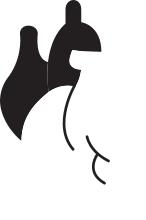
When amyloid deposits gather in the heart, it leads to heart damage such as thickened heart muscles. This makes it difficult for the heart to pump blood effectively, resulting in serious symptoms. This is called ATTR amyloidosis with cardiomyopathy. Cardiomyopathy can lead to heart failure.

When amyloid deposits gather in the nervous system, it leads to nerve damage that affects sensation, movement, strength, and bodily functions, such as digestion, urination, and sexual function. This is called ATTR amyloidosis with polyneuropathy.
What are the symptoms of ATTR amyloidosis with cardiomyopathy?
People with this condition can experience:
- Abnormal heart rhythms (arrhythmias)
- Irregular heartbeat
- Shortness of breath
- Fatigue
- Fainting
- Leg swelling (edema)
These are the most common symptoms, but they vary from person to person. You may experience symptoms not on this list.
Learn about research for ATTR amyloidosis with cardiomyopathy (CM)
What are the symptoms of hereditary ATTR amyloidosis with polyneuropathy?
People with this condition can experience:
- Tingling
- Numbness
- Burning pain
- Loss of sensitivity to temperature
- Loss of movement control
- Weakness
These are the most common symptoms, but they vary from person to person. You may experience symptoms not on this list.
Learn about research for hereditary ATTR amyloidosis with polyneuropathy (PN)
Why do people get ATTR amyloidosis?
There are 2 ways that this condition happens:
For some people, it is passed down from a family member. This happens when someone has a mutation (a change) in the TTR gene and that mutation gets inherited by their relatives.
In other situations, the condition occurs due to aging. It develops when someone gets older and is not caused by a genetic mutation.
What’s being done about it?
Currently, there are 2 types of approved
treatments for ATTR amyloidosis.
These are called stabilizers and silencers.

Stabilizers work by keeping the TTR protein stable, so it doesn't misfold and form damaging buildup.

Silencers prevent TTR proteins from being made so there are fewer TTR proteins that can misfold and build up in the body.
